What is padel? The sport, the court and the racket explained
Padel is a racket sport for four players, two against two, on an enclosed court of 10 by 20 metres. You play with a solid racket without strings and a ball much like a tennis ball, and the walls around the court are part of the game. The sport was invented in Mexico in 1969 and is now one of the fastest-growing racket sports in Europe.
Written byTeam Custom Your Padel
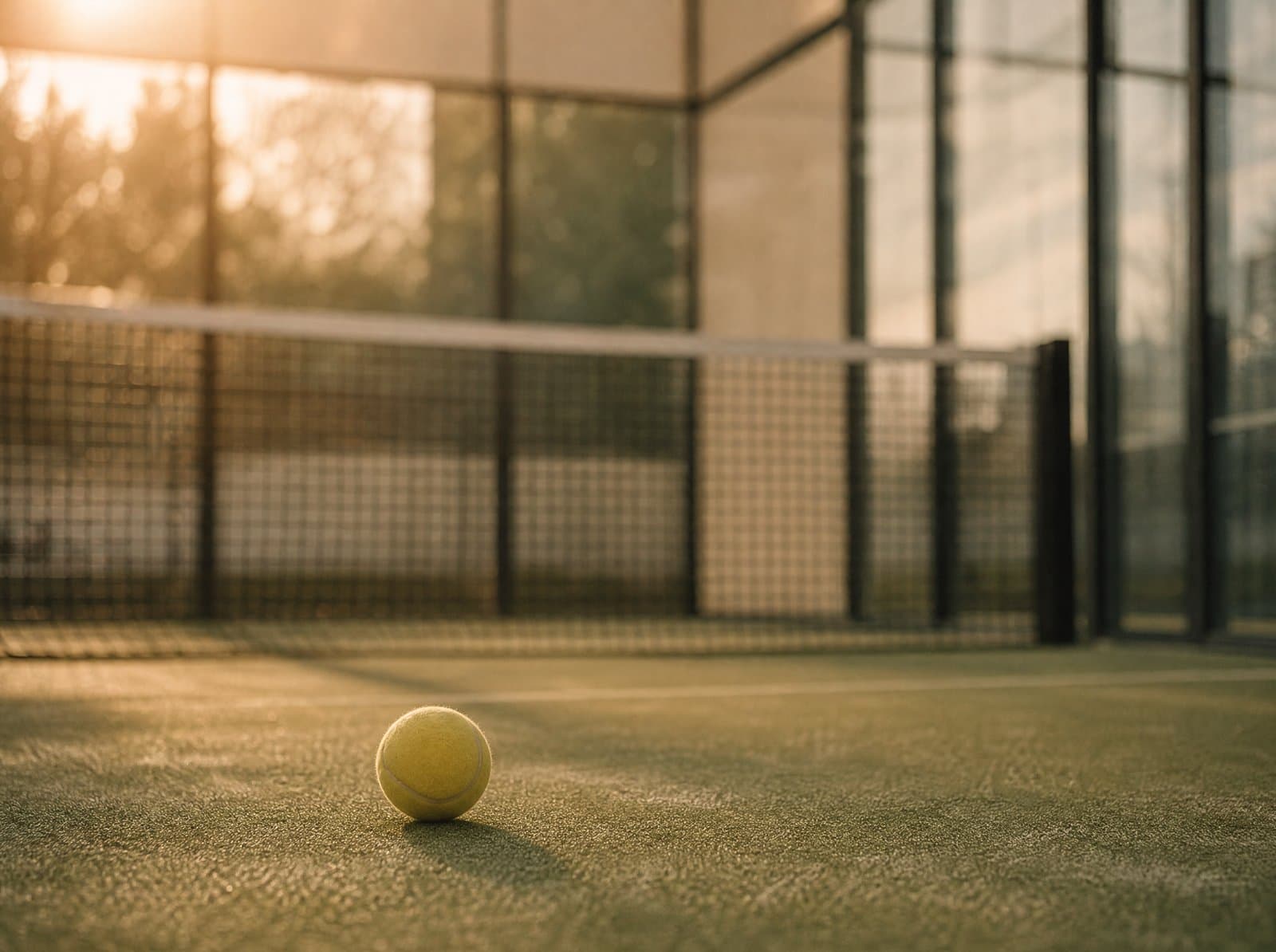
In a short space of time padel has gone from an unknown sport to a fixture in a lot of diaries. What is it exactly, how do you play it and what do you need? Here are the basics.
Padel in one paragraph
Two teams of two face each other on a court of 10 by 20 metres, with a net in the middle and walls of glass and mesh around it. You hit the ball over the net with a solid racket. After the bounce the ball may come off the walls, and you play it back from there. The scoring works as in tennis: 15, 30, 40 and game. The full rules are set out in padel rules and scoring.
Where does padel come from?
Padel started in Acapulco, Mexico, in 1969. Enrique Corcuera did not have enough room in his garden for a tennis court, so he built a smaller court with walls around it. His wife Viviana wrote down the first rules. Through Prince Alfonso of Hohenlohe, who came across the game in Acapulco, padel reached the Marbella Club Hotel in Spain in the early 1970s. The sport also took off early in Argentina. From there it spread further, including to the rest of Europe.
How big is padel now?
Spain and Argentina have played padel for decades, and the rest of Europe has been catching up fast. In the Netherlands, figures from the KNLTB and EY put the number of players at around 876,000 in 2025. In the United Kingdom, Ireland and Scandinavia the number of courts has grown quickly over the past few years, often at existing tennis clubs. In many places the supply of courts cannot keep up with demand, so booking at a busy time can take some planning.
Padel and tennis compared
| Element | Padel | Tennis |
|---|---|---|
| Court | 10 by 20 metres, enclosed by walls and mesh | Around 11 by 24 metres (doubles), open |
| Racket | Solid, perforated, no strings | Strung |
| Serve | Underarm, at or below waist height | Usually overarm |
| Walls | Ball may come off the wall and mesh after the bounce | No walls |
| Players | Usually two against two | Singles or doubles |
| Scoring | 15, 30, 40, game, sets to 6 games | The same scoring |
Why is padel so easy to pick up?
The court is smaller than a tennis court and the walls often bring the ball back, so a mistake does not always end the point. You play with four, which means you share the court hire and the game is sociable by default. And because the serve is underarm, you do not have to learn a difficult delivery before you can play.
What do you need to start?
- A racket. Many clubs hire rackets out, so you can try first. For a racket of your own, how to choose a padel racket and padel racket for beginners will help.
- Padel balls. They look like tennis balls, but they are made for this sport.
- Trainers that grip on the court surface.
- A wrist cord. Under the rules the racket must have a non-elastic cord of no more than 35 centimetres that goes around your wrist. It is compulsory.
- A court and three other players. Courts are booked through a padel club or a booking app.
Your first game
Start calmly. Let the ball bounce before you hit it, do not be afraid of the walls, and move forward as a team rather than on your own. Most beginners get further by playing the ball back steadily than by going for a winner every time.
A racket with your own name on it
For a lot of players, padel is also a way to have something of their own. At Custom Your Padel you design a racket with your name, a logo or your own design, from a single racket upwards. How that works is explained in what is a custom padel racket.
Read next
- Guide
Padel racket with a rough surface, 3D or gloss: which finish should you choose?
What a rough surface does on a padel racket, what a 3D surface and hot foil are, and whether matt or gloss makes a difference to your game.
- Guide
3K, 12K and 18K carbon in a padel racket: what it means
The K in 3K, 12K and 18K is the number of carbon fibres per thread. What that does and does not tell you, and why core, shape and balance matter more.
- Gift
Padel gift for Christmas: what to give and when to order
Christmas falls on Friday 25 December 2026. A custom padel racket with a name on it costs from €99.99, and 9 December is the last day to order.